27th EURADOS Webinar: Neutron dosimetry - Basics and applications with PADC track detectors
When?
Monday, October 13th, 2025, 15:00-16:00 CET
Overview
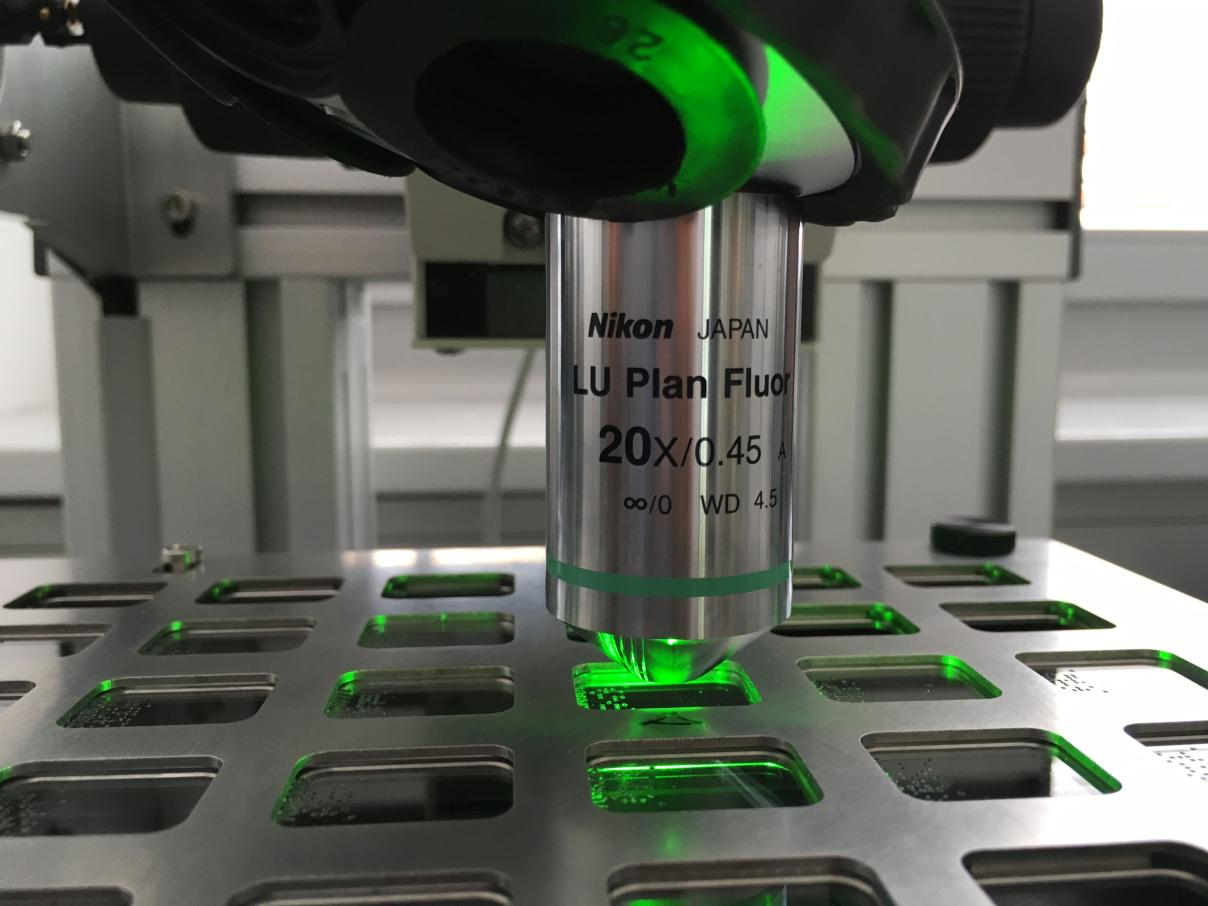
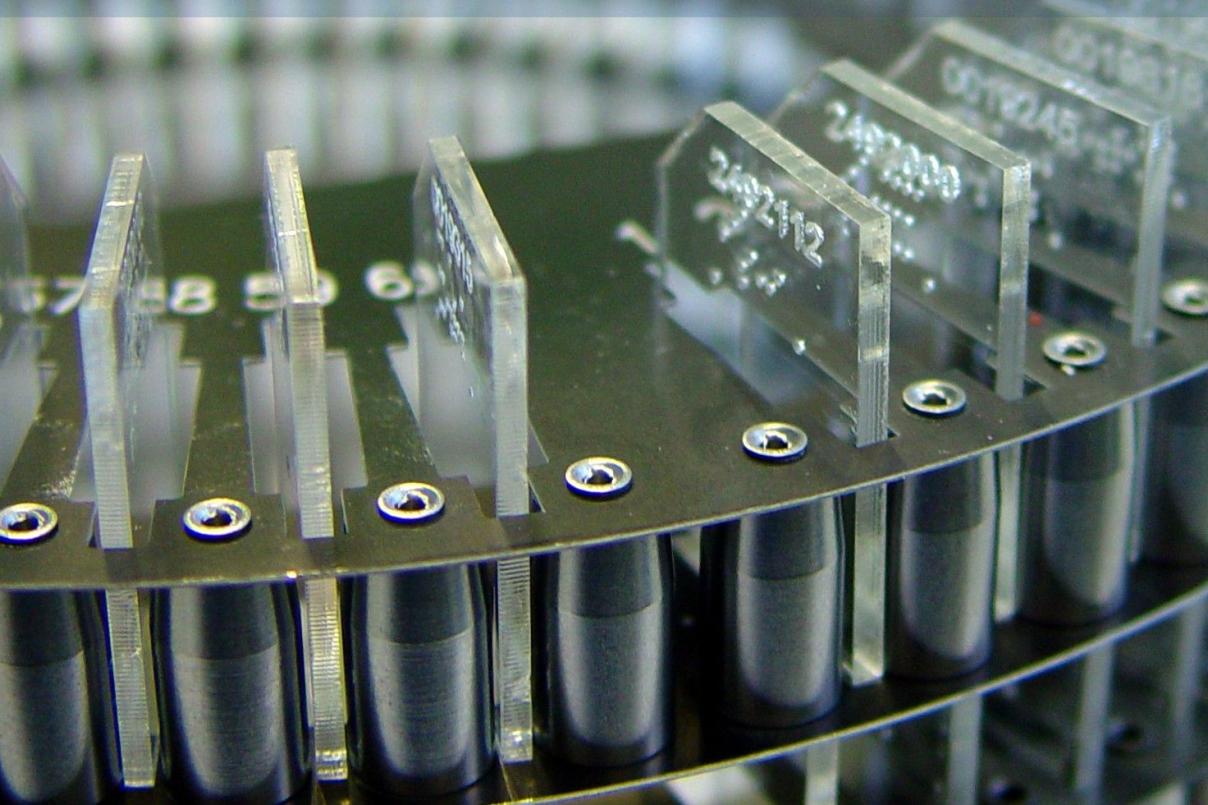
Neutron dosimetry is an intrinsically challenging task, due to the variety of phenomena neutrons undergo when interacting with matter. Over the years, many types of instruments have been developed to tackle neutron detection and measurement, each with distinct advantages and limitations. Among these, track detectors made of PADC (poly allyl diglycol carbonate, also known as CR-39) offer a quite unique and practical solution, being lightweight, cost-effective and easy to operate devices, while providing a high sensitivity in a wide range of workplace scenarios. However, there are open issues hindering the performance of PADC, especially the variability in the quality of the PADC polymer, which heavily affects the detection limits and the measurement precision. This webinar will first provide a general overview of neutron dosimetry, followed by a focus on PADC-based approaches, highlighting best practices, novel data analysis techniques, current issues, application to novel and or challenging situations, and the international effort of the scientific community to overcome these issues (i.e., the “EURADOS CR-39 Quality” task).
Agenda
- Welcome & Introduction (Ruxandra Sapoi, Dositracker, Romania)
- Neutron Dosimetry - Basics (Eduardo Yukihara, Paul Scherrer Institute, Switzerland)
- Neutron Dosimetry with PADC Detectors: Current Status and Ongoing Challenges (Matteo Bolzonella, Paul Scherrer Institute, Switzerland)
- Q&A
Speakers
Eduardo Yukihara
Head of the Radiation Metrology Section and of the Dosimetry Group at the Paul Scherrer Institute (PSI), Switzerland.
Eduardo G. Yukihara is the Head of the Radiation Metrology Section and of the Dosimetry Group at the Paul Scherrer Institute (PSI), Switzerland. He is also Adjunct Professor at the Physics Department, Oklahoma State University (OSU), Adjunct Professor at the Department of Materials Science and Engineering, Clemson University, Co-Editor-in-Chief of the Radiation Measurements Journal, and Handling Editor of Physics Open (Elsevier).
He obtained his PhD at the University of São Paulo (Brazil) in 2001. After a three year postdoctoral fellowship at OSU, he joined the faculty of OSU’s Physics Department in 2004, having achieved the level of Full Professor in 2016. He was awarded the Fellowship for Experience Researchers from the Alexander von Humboldt Foundation and spent one year at the German Cancer Research Center (DKFZ) in 2014-2015. In 2016 he joined PSI.
At OSU he led a dynamic and well-funded research group in the area of radiation dosimetry, luminescence materials and luminescence processes. Projects developed included the characterization of new radiation detectors for space dosimetry and medical applications in radiodiagnostic and radiotherapy, including proton and carbon beam therapy, as well as the development of neutron-sensitive dosimeters and new particle temperature sensors. At PSI he is expanding his research also to applied topics in neutron, personal, and environmental dosimetry.
He has authored over 100 peer-reviewed publications, co-authored the book “Optically Stimulated Luminescence: Fundamentals and Applications”, and co-authored the book chapter “Optically Stimulated Luminescence (OSL) Dosimetry in Radiotherapy” (in “Clinical Dosimetry Measurements in Radiotherapy”, Ed. D. W. O. Rogers and J. Cygler). He has given more than 20 invited talks in international conferences, served as a member of the American Association of Physicist in Medicine Task Group 191 on luminescence dosimeters, and served as a reviewer for more than 20 international journals. He is also a member of Radiation Measurements Editorial Board and current Vice-President of the International Solid State Dosimetry Organization.
Matteo Bolzonella
Physicist at the Radiation Safety and Security Department of the Paul Scherrer Institut (PSI) and winner of the EURADOS Young Scientist Award 2024
Matteo Bolzonella works as a Physicist for the Radiation Safety and Security Department of the Paul Scherrer Institut (PSI), focusing on experiments and simulations related to the expansion of the PSI high-intensity proton accelerator facility (HIPA), including the development of new beamlines and target stations for the IMPACT project.
Before joining PSI, he served as a Scientific-Technological Officer for the “Ionizing Radiation” and “Radon” sections of the Calibration Laboratory of the Politecnico di Milano (POLIMI), contributing to the routine activities of the laboratory and the improvements to its processes and infrastructures.
Previously, he studied for his PhD in Energy and Nuclear Science and Technology at POLIMI, concentrating on passive neutron dosimetry with PADC/CR-39 track detectors in collaboration with EURADOS (European Radiation Dosimetry Group).
Prior to his PhD, Matteo worked as a Senior Laboratory Technician at the European Commission's Joint Research Centre (JRC, Ispra site), where he developed a novel passive neutron personal dosimeter based on PADC.
His academic background includes a BSc in Engineering Physics and an MSc in Nuclear Engineering, both at POLIMI.
Throughout his academic and research career, he have had the opportunity to collaborate with renowned laboratories, hadrontherapy hospitals and research centers, including IRSN, CNAO, HIT, CERN and PSI.
Matteo is passionate about Nuclear Physics and Engineering, with key interests in medical applications of radiation, radiation protection and dosimetry.
He is a full member of EURADOS Working Group 2 – Harmonisation of individual monitoring and Working Group 11 – High-energy radiation fields. From 2020 to 2025 he has been the Task Leader of the “CR-39 Quality” task aimed at improving personal neutron dosimetry with CR-39 track detectors.