
WG6 – Computational dosimetry
-
Chairperson
Jonathan Eakins
UK Health Security Agency
Email: jonathan [dot] eakins [at] ukhsa [dot] gov [dot] uk -
Secretary
Anna Selva
INFN-Legnaro National Laboratories (Italy)
Email: aselva [at] lnl [dot] infn [dot] it (aselva[at]lnl[dot]infn[dot]it) -

Membership
Working Group 6 has:
- 30 full members from 12 countries
- 45 corresponding members
Motivation
Computational methods are indispensable tools in the field of radiation dosimetry, with a wide variety of applications ranging from simulation of the response of radiation detectors, simulation of radiation transport in complex geometrical setups to obtain the radiation fluence at a region of interest, to the assessment of dose quantities in exposed humans. A large variety of computer codes are available for these purposes of which many have developed to versatile, easy-to-use tools for ‘everybody’ while others require more expertise already in their operation.
Aim of working group:
Promoting good practice in the field of computational methods in radiation dosimetry for radiation protection and applications in radiation medicine
WG6 will contribute by:
As a pool of European expertise in this field, Working Group 6 promotes good practice in the field of computational methods in radiation dosimetry for radiation protection and applications in radiation medicine. It carries out scientific research and development as well as knowledge transfer activities in the area of computational dosimetry. While Monte Carlo simulations are the dominant method, other aspects of computational dosimetry such as spectra unfolding or the proper use of voxelized geometrical models are also considered.
The focus on techniques rather than scientific topics implies a cross-sectional role of WG6 and collaboration with other EURADOS WGs, covering a large number of up-to-date topics in radiation dosimetry. Furthermore, knowledge transfer on the competent use of Monte Carlo codes and other computational techniques by training courses and comparison exercises are key aspects of the WG6 scope.
Task Groups
-
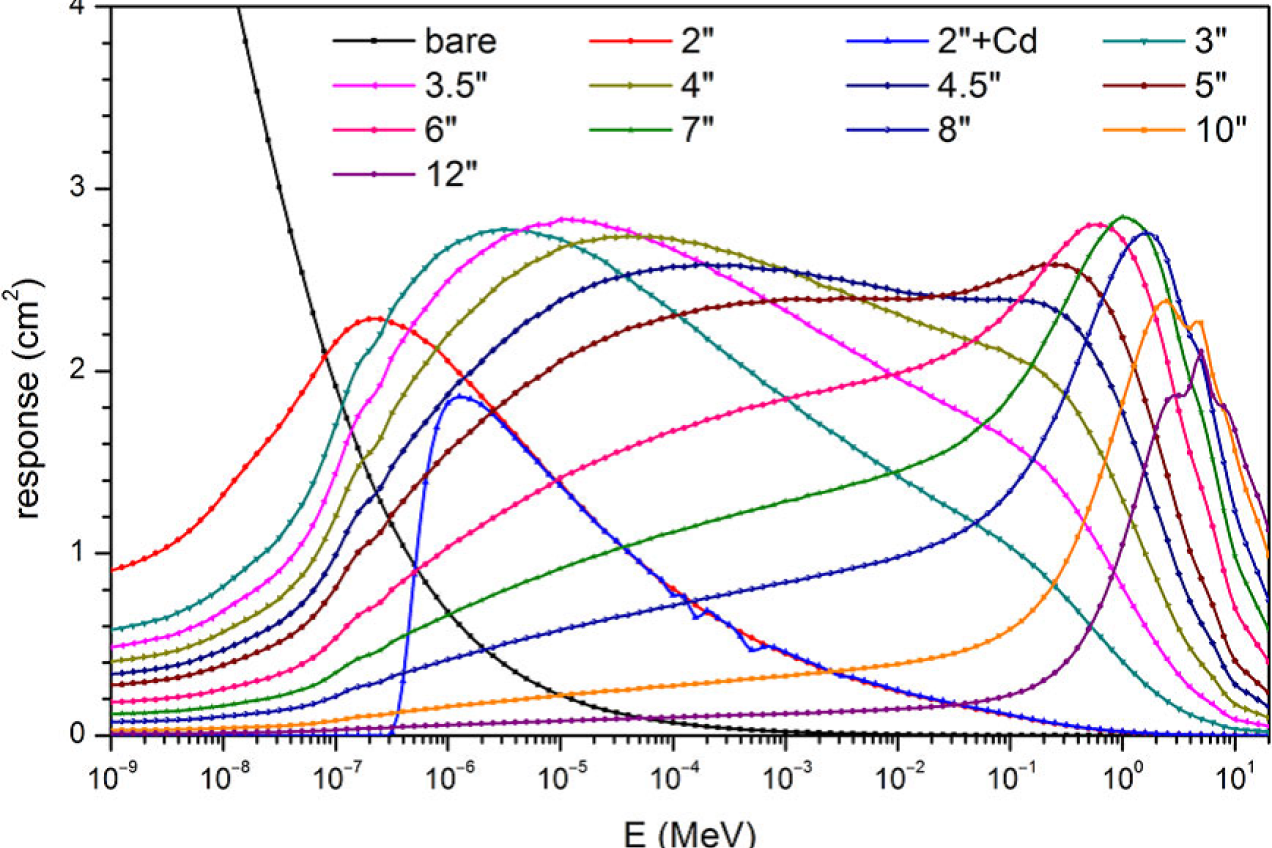
Task 1 - Neutron spectra unfolding
Task Group leader: Roberto Bedogni (INFN, Italy)
- Advancing numerical techniques for reconstructing neutron spectra from known system response functions and the values of counts obtained using Bonner Sphere sets
- Organization of intercomparison exercises on unfolding codes and methods
-
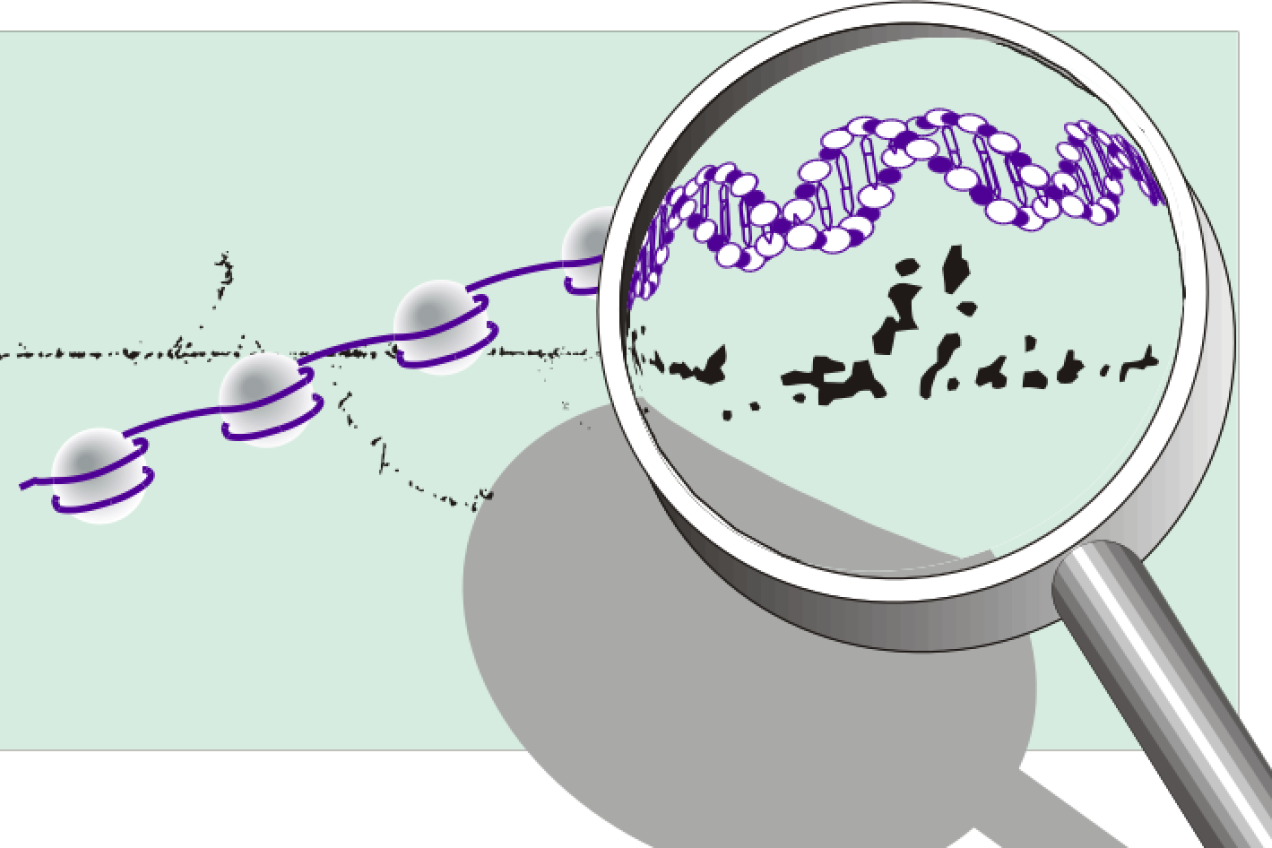
Task 2 - Micro- and nanodosimetry
Task Group leader: Anna Selva (INFN, Italy)
- Uncertainty analysis for micro- and nano-dosimetric quantities calculated by different Monte Carlo codes
- Fundamental studies of track structure and its relation with DNA damage
- Cross-section data tables for gaseous materials, to be implemented in Geant4-DNA
- Monte Carlo calculations of LET and microdosimetric quantities in proton therapy (with WG9)
-
Task 3 - Individual monitoring
Task Group leader: Jonathan Eakins (UKHSA, United Kingdom)
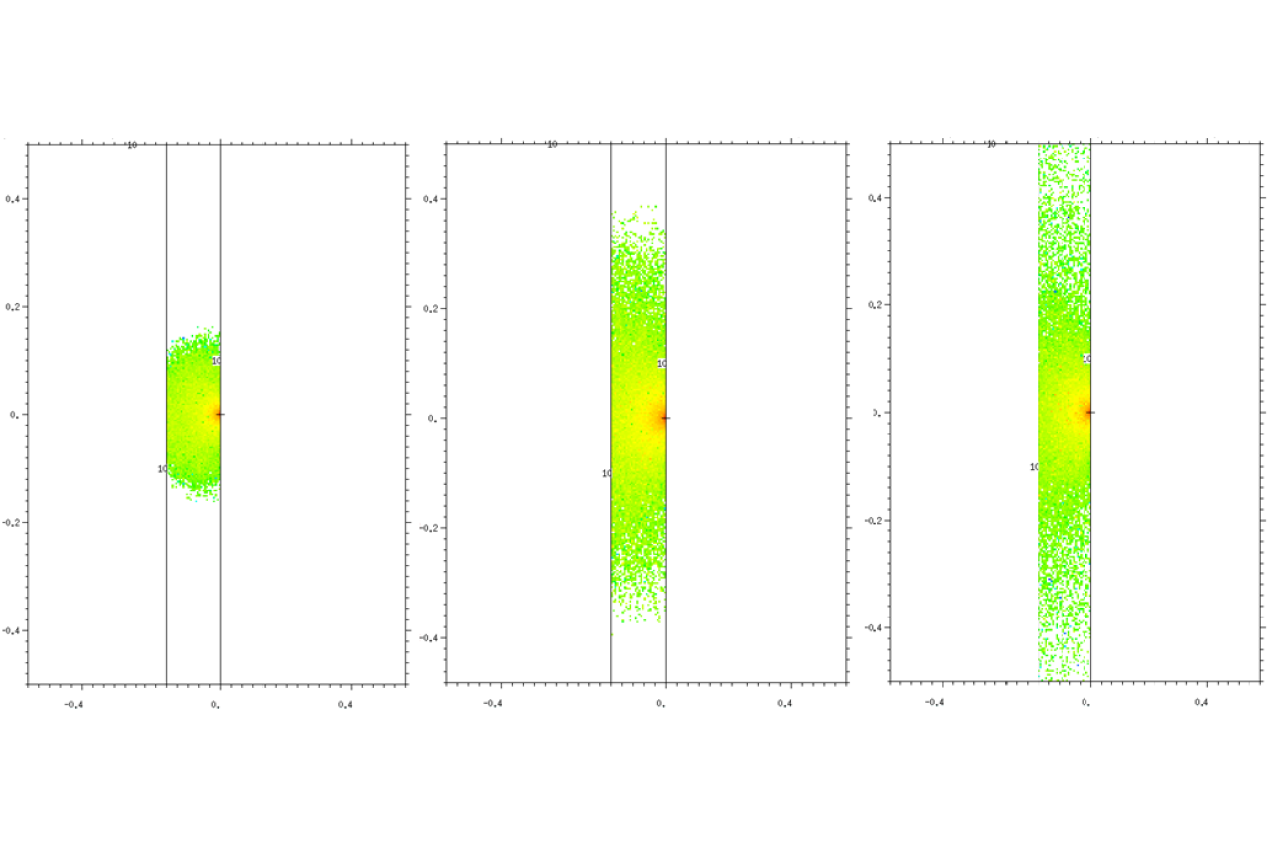
- Training on the role of computational methods in individual monitoring
- Preparation for the implementation and consequences of new dose quantities
- Support for retrospective dosimetry (with WG 10)
- Development of advanced models for skin dosimetry (with WG13)
-
Task 4 - In vivo dosimetry
Task Group leader: Montse Moraleda (CIEMAT, Spain)
- Monte Carlo simulation of the in-vivo measurement of internal contamination using computational phantoms (collaboration with WG7).
- Intercomparison exercises.
-

Task 6 - Computational phantoms
Task Group leader: Christelle Huet (ASNR, France)
- Intercomparisons on the implementation of the ICRP reference MESH phantoms in Monte Carlo codes
- Construction and implementation of voxel and MESH phantoms in Monte Carlo codes
-
Task 7 - High energies
Task Group leader: Michaël Petit (ASNR, France)
- Investigation of the discrepancies due to the different models employed in the various high energy codes to generate cross-section data for the whole MeV-GeV energy domain (with WGs 9 and 11).
- Construction of nuclear interaction models dedicated to medical applications such as proton therapy and for monitoring the high-energy neutrons in the environment and around facilities that can produce them
- Numerical simulations of neutron fluences and doses corresponding to the needs of the EURADOS community. Calculations to support experimental benchmarking for the nuclear data community (with WGs 9 and 11).
-
Task 8 - SRA input and WG strategy
Task Group leader: Jonathan Eakins (UKHSA, United Kingdom)
- Overall Working Group management and administration
- Liaison with EURADOS Council
-
Task 9 - Nuclear medicine: EANM collaboration
Task Group leader: Lara Struelens (SCK CEN, Belgium)
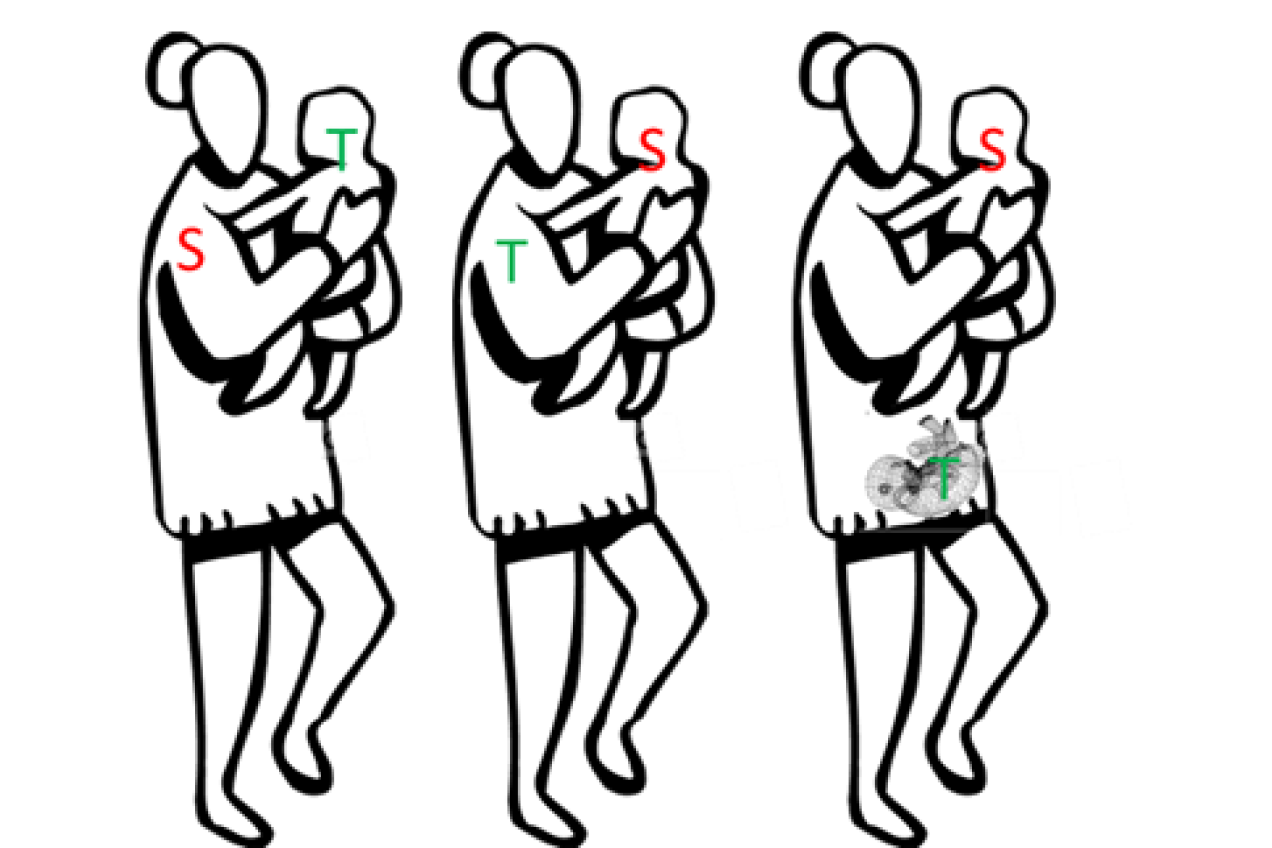
- Contributed to formation of WG13
- Task Group currently in stasis
-
Task 10 - MC in medical applications
Task Group leader: Hrvoje Brkić (Faculty of Medicine Osijek, Croatia)
- Dose to foetus under diagnostic and interventional radiology procedures (with WG12)
- Stray radiation from scanning proton therapy (with WG9)
- Monte Carlo learning code development (with WG9)
- Foetal dose assessment in proton scanning beam therapy (with WG9)
-
Task 11 - AI in Computational Dosimetry
Task Group leader: Hans Rabus (PTB, Germany)
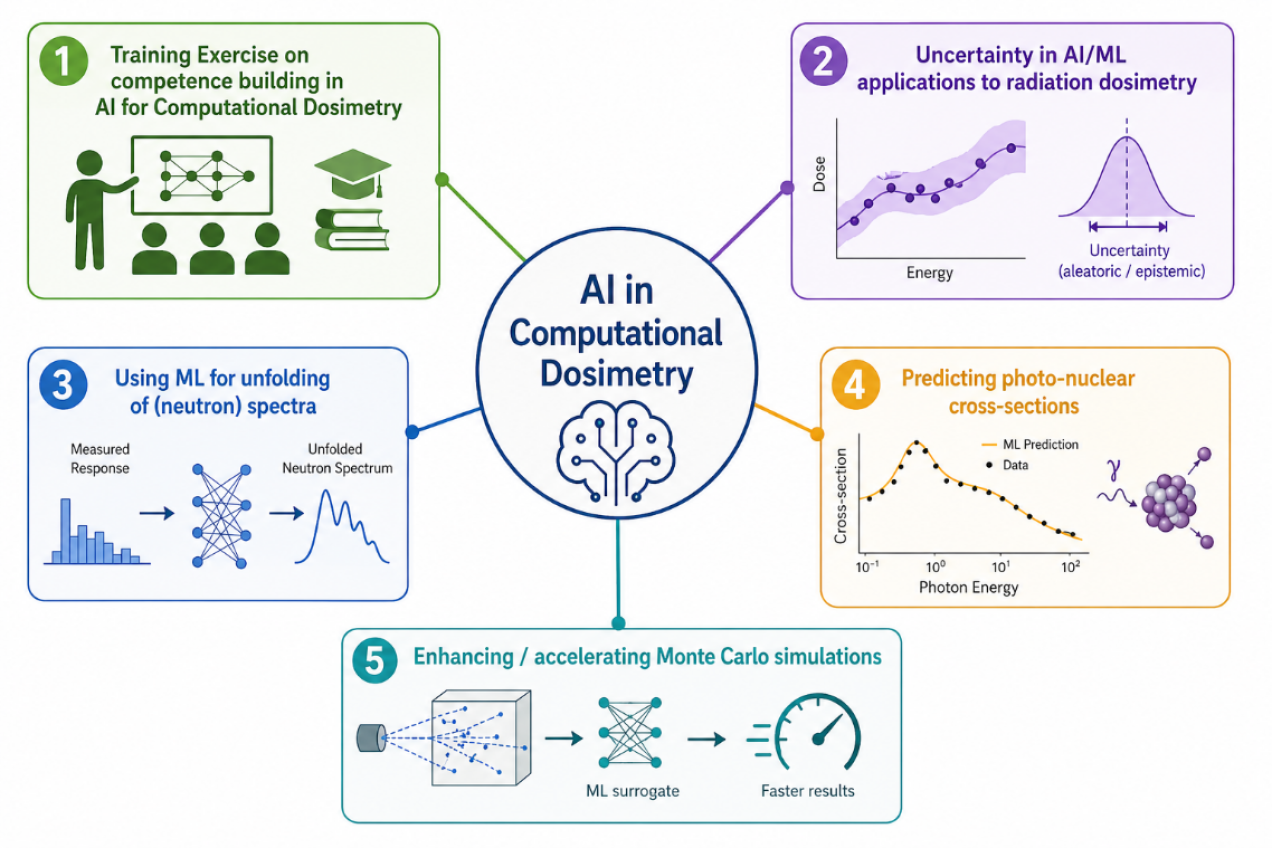
- Training Exercise on competence building in AI for Computational Dosimetry
- Uncertainty in AI/ML applications to radiation dosimetry
- Using ML for unfolding of (neutron) spectra
- Predicting photo-nuclear cross-sections
- Enhancing / accelerating Monte Carlo simulations